A thanks goes to Scott Jensen for suggesting this topic. Nearly a full week into the month of May, and the New York Yankees and Boston Red Sox make up the bottom of the American League East division. Of course it is still very early in the season, and it is doubtful that the standings at the end of the year will be identical to how they are now. Nevertheless, for many of us, it is nice to pretend that this could actually be the case.
So when was the last time this was the case? Quite awhile, and long before the current AL East came to fruition. In fact, it happened so long ago, there was no AL East division at all. There was no need for an AL East because aside from the California Angels, no American League team played west of Kansas City. The American League was simply a ten team league, no divisions.
Two current American League East teams, the Tampa Bay Rays and Toronto Blue Jays, in addition to the Seattle Mariners, Milwaukee Brewers, Kansas City Royals, plus five National League teams were not in existence yet. The Texas Rangers were still known as the Washington Senators. The Oakland Athletics were still the Kansas City Athletics.
Mickey Mantle was manning center field for the New York Yankees, and Carl Yastrzemski was playing left field for the Red Sox of Boston. The Baltimore Orioles won the American League Pennant and ultimately the World Series, sweeping the Los Angeles Dodgers four games to none. The Orioles would also take the top three spots in the MVP voting (Frank Robinson beating Brooks Robinson and Boog Powell). Roberto Clemente won the NL MVP for the Pirates, and Sandy Koufax won the Cy Young for the Los Angeles Dodgers.
Lyndon B. Johnson was President of the United States, and man had yet to step foot on the moon.
The year was 1966, four-six years ago this season.
Sunday, May 6, 2012
Saturday, May 5, 2012
Update: 0-8-0
Yet another update from an MLS team that now has sole possession of the worst start in Major League Soccer history. Toronto FC dropped their eighth game of the season to D.C. United earlier today. They get a much needed week off, but unfortunately return to face D.C. United again in two weeks, this time on the road.
Friday, May 4, 2012
10/22/11: The End of an Era?
I'm sure anyone who selected Albert Pujols early in their fantasy draft this year is regretting it. The only people regretting being involved with him more are likely the Los Angeles Angels who thought he was worth $240 million over the next ten years. Good news Angels fans, one month of what could end up being the worst contract in baseball is done with. Only another nine plus seasons to go.
In all fairness, things aren't that bleak, at least not yet. The disappearance of Albert Pujols in Anaheim is likely more temporary, even if he were never to fully return, his current production would not continue, so the contract can't be deemed the worst ever. It probably isn't even the worst on the team right now seeing that Vernon Wells was the second highest paid player in baseball last year (behind Alex Rodriguez). The Angels of course traded for Wells only a season ago. Then you have Torii Hunter which surely wasn't a horrible signing, but easily overpaid given his $18.5 million a year salary. Anyone remember Gary Matthews Jr.?
Alright, so Pujols can't stay as bad as he has been this year. Players are never always consistent. Production comes and goes in waves. However, when talking about the supposedly best player in baseball, you want a little bit more than "just a slump" when more than a month into the season he has yet to his a home run, batting near the Mendoza line, and is struggling to draw walks. Without diving into all the numbers, at least not right now, let's just look at how big a drought this is purely in terms of power, aka home runs.
Currently, Albert Pujols has 445 career home runs to his name. That is good for 37th on the All-Time list of home run hitters. More remarkably, he has done it in 12 seasons. Of the 36 names above him, the next shortest career was Jeff Bagwell at 15 seasons, and he only has four more home runs than Pujols (Bagwell is tied with Vladimir Guerrero who played 16 seasons, and could still sign this year).
I went through the 36 names on the list above Pujols, and looked month-to-month to see how many of them had droughts for a full calendar month. The only guideline I used initially was that a player had to start in six games just to see how often injuries may have affected thing. This resulted in 119 results. In fact, the only two players who hit at least one home run while starting at least six games each month were Frank Thomas and Chipper Jones. Hank Aaron, Babe Ruth, Willie Mays, etc. all missed hitting home runs for at least a month.
That isn't really a good list since players can be injured for weeks, so I took out all the results where a player didn't start at least 20 games in a month. Pujols started in 23 games in the month of April. Using at least 20 games meant no major DL stints, nor shortened months (April use to only have about a dozen games). This resulted in 21 occurrences by 11 different players that were in the same predicament at Pujols is now:
Years listed twice meant two calendar months occurred in the same year without a home run. Next, I looked at what point in a career these anomalies occurred. Many of these involved seasons where a player had yet to his his stride (and in some cases likely weren't popping steroids yet). If we eliminate every year that one of these players were 25 or younger, and older than 35, the list gets drastically shorter. I think it is safe to assume all these players reached their prime in that ten year span, so let's do that.
Carl Yastrzemski shows up on both lists plenty, but really does not share anything with Pujols. After all, Yaz played in the middle of the Deadball era during his career. The fact that he hit 449 HRs is really a true testament to the hitter he was. He hit 40+ HRs three times in a four year span. Otherwise, he never hit more than 28 HRs in his 23 year career, so really he probably should not be included in this list either.
So really that leaves him in the company of a 34-year old Fred McGriff and a 32-year old Vladimir Guerrero. McGriff would hit 19 HRs in the 1998 season, the lowest total of any of his full seasons. Vladimir Guerrero would bounce back to hit 27 HRs in 2007, the lowest total in a full season for him up to that point. The difference in those cases is that Fred McGriff had just come off a fantastic April before putting up a goose egg in May. Vlad Guerrero on the other hand didn't have his home run power for the month of July in 2007, but he still hit .292 that month. That month was right in the middle of an otherwise MVP-caliber season.
It helps in each of their cases that their troubles did not occur in April, thus starting the first twenty some games of the season without a single home run. Guerrero had been with the Angels for quite a few years at that point, so they got a lot of what they paid for before that. McGriff was only in his second month with the expansion Tampa Bay Devils Rays, but he was a bright spot in an otherwise dim team. Pujols has the unfortunate perspective of being the guy that was just signed for nearly a quarter billion dollars through the age of 41, bringing with him the title of the best hitter in the game, and the expectation of doing what Guerrero could not: returning the Angels to the World Series.
It's no secret that Pujols is off to a bad start. When you consider the company of home run hitters he has joined, and it expected to move up the ranks of, then you realize this is a really bad start. Alex Rodriguez was the guy one guy who had a shot at breaking the Barry Bonds home run record, but now that seems questionable. Nevertheless, Pujols was the guy who had the chance at eclipsing Rodriguez, yet now that could be further out of reach than it seems.
Everyone will speculate that Pujols could have been on steroids, that his age could be closer to 42 than 32, or that he is just in a bad slump. There is no real way to tell until the rest of the season and his career play out. Maybe this is the beginning of the end of one of baseball's most productive hitters. Maybe this is just a small hiccup in an otherwise Hall of Fame career. In any event, I don't think any baseball fans last fall were thinking that Albert Pujols would not hit another home run until at least May. Certainly not on October 22nd when Pujols hit his 3rd home run of the night against the Texas Rangers in Game 3 of the World Series. The end of an era? Maybe.
In all fairness, things aren't that bleak, at least not yet. The disappearance of Albert Pujols in Anaheim is likely more temporary, even if he were never to fully return, his current production would not continue, so the contract can't be deemed the worst ever. It probably isn't even the worst on the team right now seeing that Vernon Wells was the second highest paid player in baseball last year (behind Alex Rodriguez). The Angels of course traded for Wells only a season ago. Then you have Torii Hunter which surely wasn't a horrible signing, but easily overpaid given his $18.5 million a year salary. Anyone remember Gary Matthews Jr.?
Alright, so Pujols can't stay as bad as he has been this year. Players are never always consistent. Production comes and goes in waves. However, when talking about the supposedly best player in baseball, you want a little bit more than "just a slump" when more than a month into the season he has yet to his a home run, batting near the Mendoza line, and is struggling to draw walks. Without diving into all the numbers, at least not right now, let's just look at how big a drought this is purely in terms of power, aka home runs.
Currently, Albert Pujols has 445 career home runs to his name. That is good for 37th on the All-Time list of home run hitters. More remarkably, he has done it in 12 seasons. Of the 36 names above him, the next shortest career was Jeff Bagwell at 15 seasons, and he only has four more home runs than Pujols (Bagwell is tied with Vladimir Guerrero who played 16 seasons, and could still sign this year).
I went through the 36 names on the list above Pujols, and looked month-to-month to see how many of them had droughts for a full calendar month. The only guideline I used initially was that a player had to start in six games just to see how often injuries may have affected thing. This resulted in 119 results. In fact, the only two players who hit at least one home run while starting at least six games each month were Frank Thomas and Chipper Jones. Hank Aaron, Babe Ruth, Willie Mays, etc. all missed hitting home runs for at least a month.
That isn't really a good list since players can be injured for weeks, so I took out all the results where a player didn't start at least 20 games in a month. Pujols started in 23 games in the month of April. Using at least 20 games meant no major DL stints, nor shortened months (April use to only have about a dozen games). This resulted in 21 occurrences by 11 different players that were in the same predicament at Pujols is now:
- Sammy Sosa - 1992 (20 GS
- Rafael Palmeiro - 1988 (26 GS)
- Rafael Palmeiro - 1988 (27 GS)
- Rafael Palmeiro - 1989 (22 GS)
- Reggie Jackson - 1967 (22 GS)
- Reggie Jackson - 1983 (21 GS)
- Reggie Jackson - 1986 (21 GS)
- Mickey Mantle - 1968 (24 GS)
- Ernie Banks - 1954 (25 GS)
- Ernie Banks - 1954 (23 GS)
- Gary Sheffield - 1989 (23 GS)
- Eddie Murray - 1996 (24 GS)
- Fred McGriff - 1998 (24 GS)
- Stan Musial - 1944 (24 GS)
- Stan Musial - 1947 (24 GS)
- Carl Yastrzemski - 1972 (20 GS)
- Carl Yastrzemski - 1974 (25 GS)
- Carl Yastrzemski - 1975 (22 GS)
- Carl Yastrzemski - 1979 (20 GS)
- Carl Yastrzemski - 1982 (25 GS)
- Vladimir Guerrero - 2007 (23 GS)
Years listed twice meant two calendar months occurred in the same year without a home run. Next, I looked at what point in a career these anomalies occurred. Many of these involved seasons where a player had yet to his his stride (and in some cases likely weren't popping steroids yet). If we eliminate every year that one of these players were 25 or younger, and older than 35, the list gets drastically shorter. I think it is safe to assume all these players reached their prime in that ten year span, so let's do that.
- Fred McGriff - 1998 (24 GS)
- Stan Musial - 1947 (24 GS)
- Carl Yastrzemski - 1972 (20 GS)
- Carl Yastrzemski - 1974 (25 GS)
- Carl Yastrzemski - 1975 (22 GS)
- Vladimir Guerrero - 2007 (23 GS)
Carl Yastrzemski shows up on both lists plenty, but really does not share anything with Pujols. After all, Yaz played in the middle of the Deadball era during his career. The fact that he hit 449 HRs is really a true testament to the hitter he was. He hit 40+ HRs three times in a four year span. Otherwise, he never hit more than 28 HRs in his 23 year career, so really he probably should not be included in this list either.
So really that leaves him in the company of a 34-year old Fred McGriff and a 32-year old Vladimir Guerrero. McGriff would hit 19 HRs in the 1998 season, the lowest total of any of his full seasons. Vladimir Guerrero would bounce back to hit 27 HRs in 2007, the lowest total in a full season for him up to that point. The difference in those cases is that Fred McGriff had just come off a fantastic April before putting up a goose egg in May. Vlad Guerrero on the other hand didn't have his home run power for the month of July in 2007, but he still hit .292 that month. That month was right in the middle of an otherwise MVP-caliber season.
It helps in each of their cases that their troubles did not occur in April, thus starting the first twenty some games of the season without a single home run. Guerrero had been with the Angels for quite a few years at that point, so they got a lot of what they paid for before that. McGriff was only in his second month with the expansion Tampa Bay Devils Rays, but he was a bright spot in an otherwise dim team. Pujols has the unfortunate perspective of being the guy that was just signed for nearly a quarter billion dollars through the age of 41, bringing with him the title of the best hitter in the game, and the expectation of doing what Guerrero could not: returning the Angels to the World Series.
It's no secret that Pujols is off to a bad start. When you consider the company of home run hitters he has joined, and it expected to move up the ranks of, then you realize this is a really bad start. Alex Rodriguez was the guy one guy who had a shot at breaking the Barry Bonds home run record, but now that seems questionable. Nevertheless, Pujols was the guy who had the chance at eclipsing Rodriguez, yet now that could be further out of reach than it seems.
Everyone will speculate that Pujols could have been on steroids, that his age could be closer to 42 than 32, or that he is just in a bad slump. There is no real way to tell until the rest of the season and his career play out. Maybe this is the beginning of the end of one of baseball's most productive hitters. Maybe this is just a small hiccup in an otherwise Hall of Fame career. In any event, I don't think any baseball fans last fall were thinking that Albert Pujols would not hit another home run until at least May. Certainly not on October 22nd when Pujols hit his 3rd home run of the night against the Texas Rangers in Game 3 of the World Series. The end of an era? Maybe.
Thursday, May 3, 2012
Good Things Come to Road Teams Who Wait
Earlier tonight, the New York Rangers won Game 3 of their Eastern Conference Semifinals against the Washington Capitals in triple overtime. The game lasted nearly 115 minutes, making it the 20th longest game in NHL history (at least according to the Wikipedia). Home ice for Game 3 was in Washington's favor, but when games go beyond double overtime in the NHL, home ice seems to hurt more than it helps.
Of the 40 longest NHL games, ranging from 103 to 187 minutes, the road team has not only come away with more victories, but their winning percentage is remarkable. The road team has won 29 of those 40 games providing them with a .725 winning percentage. That is an oddly high winning percentage for teams that generally is are considered the underdog while on the road. The only explanation for it I can really see is that the road team hangs in the game so long that they not only take the energy out of the home team's crowd, but that they thrive on doing just that. Almost as if keeping the game tied is a slow way of building momentum. If anyone has other thoughts as to why, I'm all for hearing them.
Sadly, there are not many other lists of long games by duration for other sports. I really would like to find a comprehensive NBA list, but had no such luck. The NFL does not really apply here given that games don't go beyond a single overtime (not to mention the poor overtime system). This trend does carry to the Swedish National Hockey League where of the ten longest games in their league's history, eight of them were won by road teams.
I did find a list of the 42 Major League Baseball games that have gone 20 innings or more. Subtracting the four games that were called for ties, the away team won 24 of the remaining 38 longest games. The winning percentage of .632 does not quite compete with the NHL road team record, but it does lead to the question, in games that carry on extra long, does the away team have a distinct advantage to the home team?
Wednesday, May 2, 2012
Made in Japan
Yu Darvish, the latest high profile starting pitcher from Japan, has already been having his name mentioned with the Cy Young award. While I feel it is far too early to suggest awards for players, if there was any talk of awarding the Cy Young after one month, you would have a hard time arguing against the Texas Rangers starter. After five starts, he holds a 4-0 record while ranking fifth in the American League in both strikeouts (33) and ERA (2.18).
Numbers can sometimes be deceiving, especially for a pitcher who batters have not got a look at before. Nonetheless, I thought it would be worth comparing him to the first five starts of every other Japanese pitcher who has made at least 100 starts in the Major Leagues. The one player excluded was former Montreal Expo Tomo Ohka who debuted primarily as a reliever. By my count, that leaves less than a half dozen other players:
After 5 Starts:
Hideo Nomo (1995): 0-0, 26.2 IP, 3.71 ERA, 40 K, 18 BB, .202 BA, .694 OPS
Masato Yoshii (1998): 1-1, 30.0 IP, 2.70 ERA, 23 K, 10 BB, .239 BA, .710 OPS
Kazuhisa Ishii (2002): 5-0, 29.2 IP, 3.03 ERA, 34 K, 16 BB, .214 BA, .594 OPS
Daisuke Matsuzaka (2007): 3-2, 33.0 IP, 4.36 ERA, 38 K, 10 BB, .242 BA, .650 OPS
Hiroki Kuroda (2008): 1-2, 30.2 IP, 3.82 ERA, 16 K, 8 BB, .278 BA, .731 OPS
Yu Darvish (2012): 4-0, 33.0 IP, 2.18 ERA, 33 K, 17 BB, .238 BA, .660 OPS
One interesting piece is that Nomo, Yoshii, and Ishii each pitched five to seven shutout innings in their debut, and Matsuzaka and Kuroda allowed only one run over seven innings each. By the third, fourth, and fifth starts, batters seemed to have a better idea of what to expect, and most of them had poor games for at least one of those starts. Nomo had a poor start in his second start, giving up seven runs.
Darvish has been a bit of an anomaly in that sense. He debuted against the Seattle Mariners in April, and promptly gave up four runs in the first inning, and one more in the second. He settled down, and since that second inning, he has only given up three earned runs in the last 31 innings he pitched. If one was to ignore those first two innings, his ERA would be a stunning 0.87. It isn't as if he is skating by on lowly teams by any means either. His troubling first game was against the Seattle Mariners, but his last (and best) three games have come against the New York Yankees, Toronto Blue Jays, and Detroit Tigers who currently rank 3rd, 4th, and 7th respectively in runs scored (Texas is in 1st).
Of the players mentioned above, it is worth noting how each continued on in their debut season. Nomo would continue on to a stellar year that saw him win Rookie of the Year for the Los Angeles Dodgers and finish fourth in the Cy Young voting with a 13-6 record and 2.54 ERA. He would pitched in the Majors through 2005 (plus a very brief stint in 2008). While productive, he was never able to reproduce the numbers of his rookie season in 1995.
Yoshii's promising start finished solid enough with a 6-8 record and 3.93 ERA, but was far from special. Like Nomo, it was the best he would do at the Major League level, and only pitched four more seasons, the best of them mediocre.
Ishii's fantastic 5-0 start would continue to 14-10 as he struggled with control. He walked 106 batters in his rookie season (2002) to lead the National League, and 101 the next season to finish in second. His career only last four seasons in the Major Leagues.
More recently, Matsuzaka would have a mediocre first season with the Red Sox, but had a stellar sophmore appearance, making a run at the Cy Young with an 18-3 record and 2.90 ERA. Since then, he has been plagued by injury problems and made only 44 starts over the last three seasons. This year he has yet to debut, being hampered by more injuries.
The aged (37) Kuroda has only been in the Major Leagues for four full seasons, but could be considered the most consistent Japanese import. His ERA has always ranged between 3.07 and 3.76, including this year in his first year with the Yankees. Perhaps Kuroda's best measure is his WHIP which has never measured over 1.22 in his four full seasons.
It will be very interesting to see how things play out for Darvish. Initially, it looked like Darvish may struggle with walking batters like Ishii after he walked 13 batters in the first three games while striking out only 14. However, in the last two games he has walked only 2 batters while striking out 19. It is a small sample size, but it could be a sign of things to come.
Furthermore, the greater challenge for Darvish, who I remind you is only 25, will like be whether or not he can continue to build on this success. Of the other pitchers mentioned, they generally all peaked their first or second season in the majors. Even Nomo who is remembered for his early success, including the only no-hitter at Coors Field against a very stacked Rockies lineup hit his peak early. After 1996, he spent the next five seasons pitching for five different teams with below average results. In 2002 and 2003, he would return to the Dodgers and put together two more very solid years before breaking down in his final couple of years.
Only Kuroda has managed to continually improve season to season, but only so much. He began solid enough, but his numbers have never screamed for the Cy Young. Can Darvish steadily improve (or at least maintain a similar level to where he is at)? Or could he prove to be another Matsuzaka or Nomo who showed stunning stuff early in a career, only to fall back to the middle of the pack in years to come? The next chance we will get to find out should be Sunday when Yu and the Rangers take on the Cleveland Indians. At the rate he is going, he could become the first Japanese import to reach the glorified 20-win season.
Tuesday, May 1, 2012
Artificial Steals
How many have heard that the stolen base is becoming a lost part of the game? That after a century of heavy use, 21st century baseball replaced it with power hitters? That the long ball is more important than small ball and the extra base?
That isn't exactly true, and is quite a stretch in any aspects. Most fans know that when it comes to stolen bases, Rickey Henderson was king, and likely will be for some time to come, stealing the majority of his bases in the 1980s. Before him was Lou Brock who did it in the late 60s and 70s, and way back when it was done by Ty Cobb who did most of his damage in the first two decades of the twentieth century. The thing is there were quite a few decades between Cobb and Brock, but not much in the way of players who stole bases.
If you look at the top five of the modern era of baseball when it comes to stolen bases, you find Henderson, Brock, Cobb, and two more from the 80s: Tim Raines and Vince Coleman. Fact of the matter is, stolen bases were a big part of the game in the 1800s until about 1920. After 1920, the number of stolen bases declined sharply. They only gradually began to climb once again between 1950 and 1970, then again peaked in popularity from the mid-1970s through the 80s. Once again, the began to decline in the 1990s, and so fans began to think we lost an important part of the game.
Really, we didn't lose an important part of the game so much as we saw a brief phenomena in a major pitchers era. Furthermore, the game was made more for small ball and stolen bases. Certainly stolen bases were a major part of the game during the infancy of baseball, and far more popular than they ever would be again. However, a game where a home run didn't have to clear a fence, and doubles and triples were more rampant meant that stolen bases were more likely.
There first decline came with the arrival of Babe Ruth when he showed the baseball world that home run hitters were the future of the game. Stolen bases really bottomed out between the 1930s and 50s. In fact, in the year 1950, Dom Dimaggio lead the American League in stolen bases...with 15. It wasn't until the 1960s with Maury Willis, and later Lou Brock that they began to win the sport back over.
However, there is one major factor overlooked when it came to the revival of stolen bases, and that is the infamous artificial turf. To the best of my knowledge, the only park still using a form of turf is Rogers Centre of the Toronto Blue Jays which use a surface known as Grass 3D. However, in the 70s and 80s, AstroTurf surfaces were becoming all the rage in the MLB and NFL worlds. As most may recall, when it came to baseball, artificial turf generally meant that there was no diamond of dirt surrounding the infield. Rather, dirt surrounded each base individually with sections of turf between them.
This had various effects such as more base hits as ground balls had more speed, as well as a significantly overlooked aspect, the impact on base runners. While these are extreme examples, try running on a sidewalk versus the beach. It's obviously much more difficult to run in sand, thus it slows you down. Baseball fields worth the same way albeit to a lesser effect. Running on AstroTurf is not all that different than on a solid concrete surfaces, especially since this turf was usually on top of concrete. While baseball dirt isn't the same as the beach, running on dirt slows a runner down in baseball. Moreover, running in cleats only adds to the issue, an issue that doesn't exist when cleats are not worn.
In any event, I took the number of stolen base attempts (not stolen bases) from 1920-2010. I used 1920 merely because it was the just as the home run was coming into play, but more important, it is when the statistic Caught Stealing began to be used. Therefore, we can add Stolen Bases and Caught Stealing to truly find how many Stolen Base Attempts there were each season.
Now once we have the total for each season, we need to weight each value. In 1950, there were only sixteen MLB teams, and only 154 games played per season. Therefore, the MLB season only had 1,232 games taking place. In 2010, we have 30 MLB teams and 162 games played for a grand total of 2,430 games each year. Therefore, we multiply each season by a factor to give us the appropriate number of Stolen Base Attempts for each season as if 2,430 games were being played.
Note the blue line as to how far stolen base totals fell in the 1920s, and just how low there were by 1950. Even if 2,430 games were played in 1950, the total number of stolen bases would have been under 2,000. Compare that to 2010 when over 4,000 stolen bases were recorded. In fact, if we find the average for these values between 1920 and 2010, we get 3,871 stolen bases per year. While they may have fallen in the past twenty years, they have become steady in the past half decade and remain very close to the average.
However, you'll notice the red line on the graph indicating the number of MLB stadiums each year with some form of artificial turf. The first was in 1966 in the Astrodome. Comiskey Field began a year later, and in 1970, four additional stadiums began using it. A couple parks got rid of it before 1980, but you can see the number peaked at 10 for a number of years. It was only the recent advent of many new stadiums that left AstroTurf to be little more than a sports artifact.
Nevertheless, looking at the graphs on top of each other, we see a very positive correlation between the number of stolen bases and the number of aritifical turf stadiums, hence the Artificial Steal.
Now it is worth noting that while all players played on both grass and turf, Henderson spent the majority of his career with the Oakland Athletics which has only used grass in their stadium. However, many other more recent names near the top of the list including Tim Raines, Vince Coleman, Joe Morgan, Ozzie Smith, Cesar Cedeno, and even Barry Bonds spent the better part of their speedster years on AstroTurf.
Just food for thought next time ESPN babbles on about how stolen bases are being lost as a part of the game.
Senna
Eighteen years ago on this day, May 1, 1994, a Brazilian Formula One racer named Ayrton Senna was killed while leading the San Marino Grand Prix. To say he was the best Brazil has ever had to offer to Formula One would be a gross understatement. He was one of the best the world had ever seen until tragically his life was cut short at the age of 34.
I've mentioned in my basketball posts that the sport slides into a realm that I know less than I should. Tonight, I'm flying way past that realm to one I know very little about, but have had a recent kick of interest in lately. Formula One racing probably won't grab much in the way of attention here, but I'm giving it a shot anyway. The recent "kick" came from stumbling across a documentary on the late Brazilian driver. The movie is simply called Senna, and if you can appreciate sports documentaries at all, I highly recommend this film. Even if you don't know what Forumla One racing is, this documentary came off as extremely interesting. It isn't too difficult to find for any Netflix users out there as it can be streamed online.
Senna's career was remarkable from the second he debuted in the series in 1984. He raced in 162 Formula One races, and won 41 of them (25.3%). Only one other driver (Michael Schumacher) has entered more races while winning at a higher clip. To this day, his 41 wins rank third all-time behind Schumacher and Senna's former teammate and rival, Alain Prost. Senna's career was not without controversy. The 1989 Grand Prix in Japan would attest to that as well as other run ins with Prost and the head of the Formula One. his skill behind the wheel is unquestionable as noted by the video below.
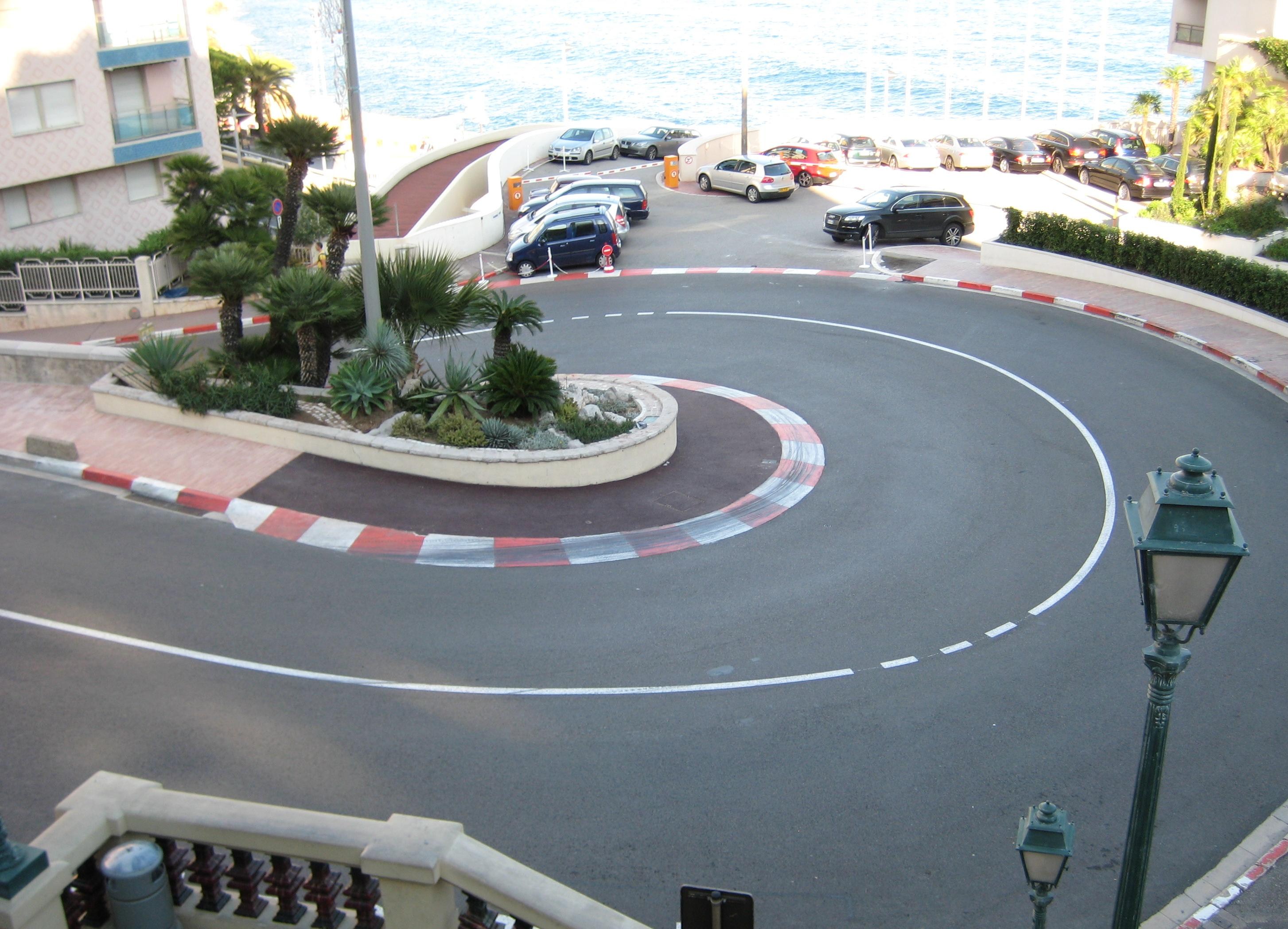
Perhaps the record really worth mentioning though is Senna's six victories at the Monaco Grand Prix, and just how close he came to increasing the total even further. For those who don't know, the Monaco Grand Prix would be similar to the Indianapolis 500 or more recently the Daytona 500. It is among the most prestigious races in the world if not the one held in the highest regard. Unlike Indianapolis or Daytona, this isn't a simple oval of high speeds. This is 78-mile race held on a two mile street course. There are significant elevation changes. Sharp 90, and even 180 degree turns litter the track, and there is even a tunnel. If Monaco had not been filled with a long history and grandfathered in, there track would never be permitted to be used today. Furthermore, unlike the American tracks where racing comes to a halt if the weather unleashes anything more than a sprinkle, Formula One races this insane track in the pouring rain if they have to.
Senna made his Monaco debut in 1984 racing for a team known as Toleman. Formula One is similar to the English Premier League of soccer in that only a handful of the overall number of competitors really are expected to be winning races. Teams like Toleman are there basically as stepping stones for drivers to get in the series, but the drivers, and often these teams do not hang around very long. Toleman was not suppose to put Senna in a place to win, but at Monaco in 1984, Senna gave them a run they wouldn't forget. Senna thrived in the rain, and this particular Grand Prix was very wet. Senna had mounted a charge to second, and trailed only Prost. Every lap, Senna knocked of significant amounts of time, and was quickly catching Prost. After 32 laps, the race was red flagged for rain, and called. Senna passed Prost at the finish line, but due to rules, the results were computed for the last full lap which was Lap 31. Senna would finish second.
He would win his first Monaco Grand Prix three years later in 1987. In 1988, Senna would join Prost for the McLaren team. Senna would take a commanding lead at Monaco where no one would touch him. He was told to slow down by his crew because he had such a large lead, and didn't feel he needed to be so aggressive. Alas, a lapse in judgement would see him hit a wall, and he would fall out of the running. Prost would go onto victory. Senna returned in 1989, to win his second race at Monaco. He would continue that tradition, and win every single Monaco Grand Prix through 1993, his final race at the circuit. Only four drivers had ever won at Monaco more than three times, and no one else had ever won six times.
It truly was a brilliant feat and record. Senna would go on to capture three championships. Only three other drivers have more. He was the youngest to ever win three championships, and it begs the question as to how much more he could have accomplished had tragedy not struck eighteen years ago. Brazil is a nation synonymous with soccer in the sporting world, and little more. However, Ayrton Senna was very proud of where he was from, and Brazil was equally proud of him.
This day eighteen years ago was the final piece of an extremely tragic weekend in San Marino. The race was marred by many accidents. However, none so tragic as the results of Senna's death as well as the death of Roland Ratzenberger a day earlier in qualifying. It is worth noting that following those separate incidents, Formula One safety was stepped up significantly, and to this day, not another death has occurred in the series.
Anyway, I wanted to touch on an athlete whose death isn't forgotten so much as unknown of in the United States, especially for how great he was. I highly recommend taking the time to watch the documentary Senna to truly see how much of an impact this driver made, as well as how incredibly tragic that weekend was eighteen years ago in San Marino.
I've mentioned in my basketball posts that the sport slides into a realm that I know less than I should. Tonight, I'm flying way past that realm to one I know very little about, but have had a recent kick of interest in lately. Formula One racing probably won't grab much in the way of attention here, but I'm giving it a shot anyway. The recent "kick" came from stumbling across a documentary on the late Brazilian driver. The movie is simply called Senna, and if you can appreciate sports documentaries at all, I highly recommend this film. Even if you don't know what Forumla One racing is, this documentary came off as extremely interesting. It isn't too difficult to find for any Netflix users out there as it can be streamed online.
Senna's career was remarkable from the second he debuted in the series in 1984. He raced in 162 Formula One races, and won 41 of them (25.3%). Only one other driver (Michael Schumacher) has entered more races while winning at a higher clip. To this day, his 41 wins rank third all-time behind Schumacher and Senna's former teammate and rival, Alain Prost. Senna's career was not without controversy. The 1989 Grand Prix in Japan would attest to that as well as other run ins with Prost and the head of the Formula One. his skill behind the wheel is unquestionable as noted by the video below.
Perhaps the record really worth mentioning though is Senna's six victories at the Monaco Grand Prix, and just how close he came to increasing the total even further. For those who don't know, the Monaco Grand Prix would be similar to the Indianapolis 500 or more recently the Daytona 500. It is among the most prestigious races in the world if not the one held in the highest regard. Unlike Indianapolis or Daytona, this isn't a simple oval of high speeds. This is 78-mile race held on a two mile street course. There are significant elevation changes. Sharp 90, and even 180 degree turns litter the track, and there is even a tunnel. If Monaco had not been filled with a long history and grandfathered in, there track would never be permitted to be used today. Furthermore, unlike the American tracks where racing comes to a halt if the weather unleashes anything more than a sprinkle, Formula One races this insane track in the pouring rain if they have to.
| One of the 19 turns at Monaco. |
He would win his first Monaco Grand Prix three years later in 1987. In 1988, Senna would join Prost for the McLaren team. Senna would take a commanding lead at Monaco where no one would touch him. He was told to slow down by his crew because he had such a large lead, and didn't feel he needed to be so aggressive. Alas, a lapse in judgement would see him hit a wall, and he would fall out of the running. Prost would go onto victory. Senna returned in 1989, to win his second race at Monaco. He would continue that tradition, and win every single Monaco Grand Prix through 1993, his final race at the circuit. Only four drivers had ever won at Monaco more than three times, and no one else had ever won six times.
It truly was a brilliant feat and record. Senna would go on to capture three championships. Only three other drivers have more. He was the youngest to ever win three championships, and it begs the question as to how much more he could have accomplished had tragedy not struck eighteen years ago. Brazil is a nation synonymous with soccer in the sporting world, and little more. However, Ayrton Senna was very proud of where he was from, and Brazil was equally proud of him.
This day eighteen years ago was the final piece of an extremely tragic weekend in San Marino. The race was marred by many accidents. However, none so tragic as the results of Senna's death as well as the death of Roland Ratzenberger a day earlier in qualifying. It is worth noting that following those separate incidents, Formula One safety was stepped up significantly, and to this day, not another death has occurred in the series.
Anyway, I wanted to touch on an athlete whose death isn't forgotten so much as unknown of in the United States, especially for how great he was. I highly recommend taking the time to watch the documentary Senna to truly see how much of an impact this driver made, as well as how incredibly tragic that weekend was eighteen years ago in San Marino.
Subscribe to:
Posts (Atom)